
Benigno Uria
@benigno_uria
Followers
223
Following
71
Media
0
Statuses
13
London, England
Joined May 2018
Very proud to see our model back at the top of the image generation ranking in lmarena. Progress never ends :)

Imagen 4 Ultra is the best text to image model in the world 🖼️, and we are just getting started : ) Available right now for scaled production use in the Gemini API and AI Studio!
0
0
18
Imagen 4 Ultra is the best text to image model in the world 🖼️, and we are just getting started : ) Available right now for scaled production use in the Gemini API and AI Studio!
111
144
2K

Breaking news from Text-to-Image Arena! 🖼️✨ @GoogleDeepMind’s Imagen 3 debuts at #1, surpassing Recraft-v3 with a remarkable +70-point lead! Congrats to the Google Imagen team for setting a new bar! Try the best text2image at LMArena and cast your vote! More analysis👇
46
140
853

Thrilled to share #Lyria, the world's most sophisticated AI music generation system. From just a text prompt Lyria produces compelling music & vocals. Also: building new Music AI tools for artists to amplify creativity in partnership w/YT & music industry https://t.co/CMttmLPjoC
110
511
2K
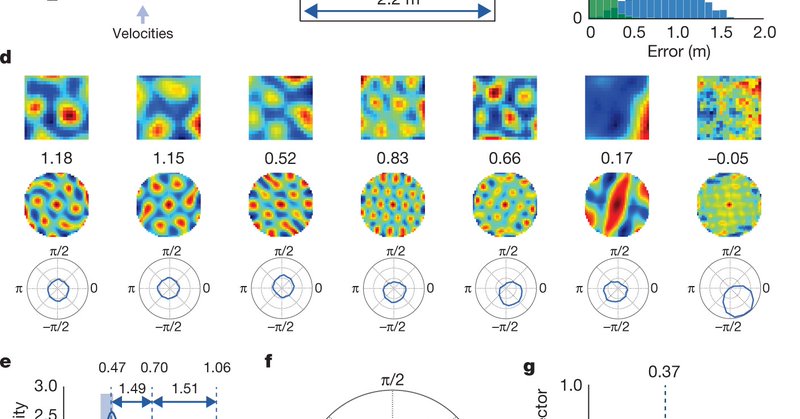
Very happy to share our latest work. Our model develops hippocampal-like spatial representations by predicting forthcoming visual inputs.

Can artificial agents understand space the way animals do? Our researchers propose a model that transforms visual experience into the spatial representations found in the hippocampal formation: https://t.co/FwxHeZue2V
2
24
134
dm_control is our Python toolkit for physics-based reinforcement learning tasks. We've released new models 🤖🕷🐕 & a brand new tutorial - see below! Github: https://t.co/953f6Qw6oJ Tutorial: https://t.co/4ggH7Hp60n Blog: https://t.co/vDQpeKs8Je Videos: https://t.co/8ACgtQOskQ
7
228
912

Grid cells - specialised brain cells that act as an inner GPS - were discovered in 2005, leading to the 2014 Nobel Prize. Now artificial grid cells are being used to help AI systems navigate new environments like a human
theguardian.com
Google’s AI beat humans at a game that involved racing around an unfamiliar virtual environment
6
145
341
Proud to share our latest Nature paper on vector-based navigation using grid-like representations. https://t.co/NryJot9T2j
@DeepMindAI @nature #neuroscience #AI
nature.com
Nature - Grid-like representations emerge spontaneously within a neural network trained to self-localize, enabling the agent to take shortcuts to destinations using vector-based navigation.
2
11
58