

Michigan Engineering
@UMengineering
Followers
27K
Following
16K
Media
9K
Statuses
26K
Developing tomorrow's leaders and technologies to move society forward. Let’s shape the future—together.
Ann Arbor, MI
Joined March 2009
In 2025, Michigan Engineering delivered in big ways: - Histotripsy’s $2.25B milestone - ZEUS laser’s first experiment - 40-miles of autonomous air space - Students improving urban farming tech - New solutions to track & remove space debris Go Blue! 💛💙
0
0
2
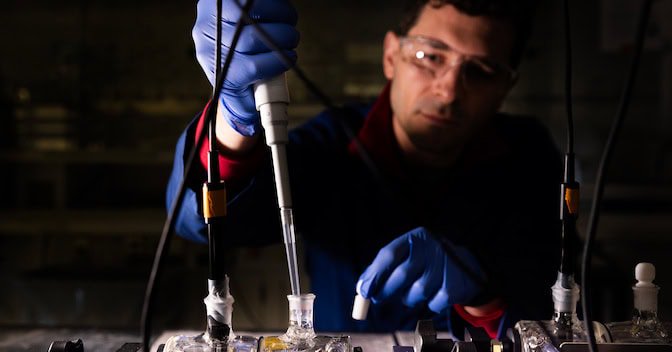
NEW STUDY: “More brines could be mined for lithium with counterintuitive method.” Discovered by accident, the new approach could use membranes to help extract lithium from overlooked "low-quality" reservoirs with high magnesium.
news.engin.umich.edu
Discovered by accident, the new approach could use membranes to help extract lithium from overlooked "low-quality" reservoirs with high magnesium.
0
0
1
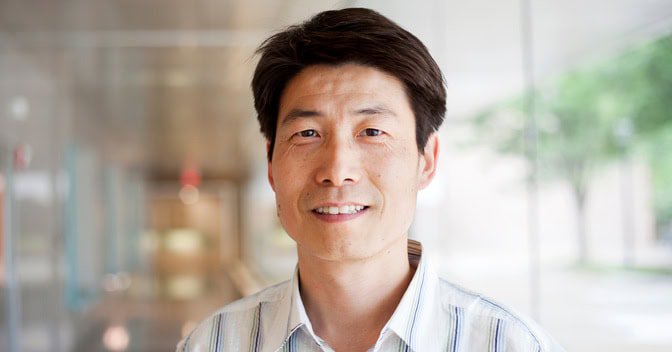
NEW ARTICLE: “National Academy of Inventors to induct Jay Guo.” Guo is recognized for advances in nanoscale lithography, transparent conductors and structural color.
news.engin.umich.edu
Guo is recognized for advances in nanoscale lithography, transparent conductors and structural color.
0
1
0
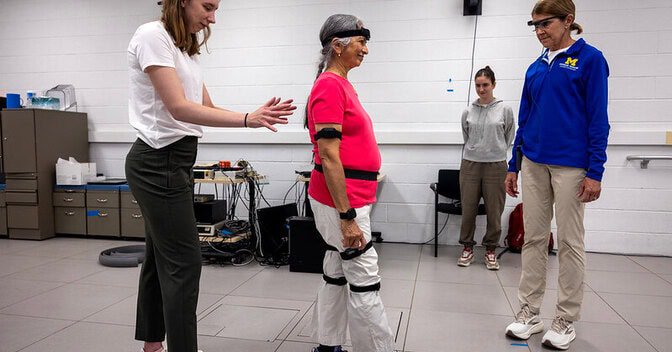
NEW ARTICLE: “AI supports home-based balance training.” New machine learning model draws data from wearable sensors to predict how a physical therapist would assess balance training performance. https://t.co/hbrdFzu65V
news.engin.umich.edu
New machine learning model draws data from wearable sensors to predict how a physical therapist would assess balance training performance.
0
0
1
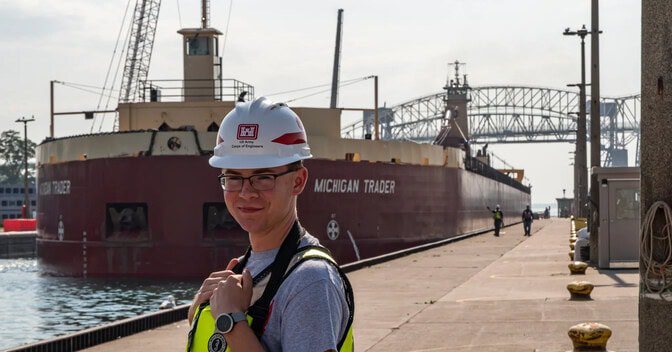
NEW ARTICLE: “Scholarship enables undergraduate to pursue passion for naval reporting.” Reporting on the Great Lakes maritime industry became possible with reduced financial burden.
news.engin.umich.edu
Reporting on the Great Lakes maritime industry became possible with reduced financial burden.
0
0
1
This past summer’s M-SHORE students dove into semiconductor research at the LNF — from wide bandgap devices to nanoscale fabrication. Their projects. Their voices. Their experience. Watch below and learn more here - https://t.co/gN917xxJnn
0
0
0
Today we honored Dr. Thomas Zurbuchen with the new ZEAL Award and the renaming of CFE's EHour in his name. The first ZEAL Award went to alum + founder Jason Bornhorst (’09). “Courage and iteration are key,” Zurbuchen told students. Read more here -> https://t.co/aPixXhTz6U
0
0
1
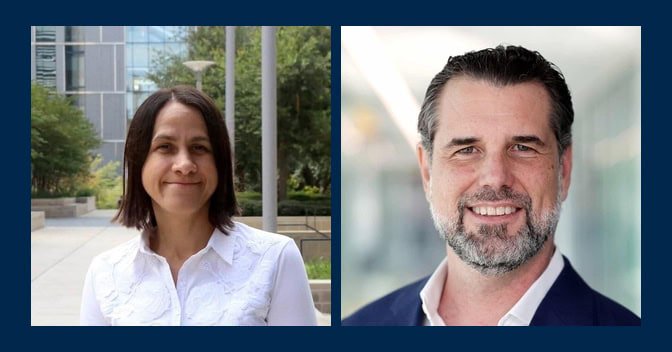
NEW ARTICLE: "U-M chemical engineering welcomes new researchers.” Their work in material design and computational engineering has enabled more effective antibody medicines and smart windows for more energy-efficient buildings. https://t.co/oH4RbxVo6b
news.engin.umich.edu
Their work in material design and computational engineering has enabled more effective antibody medicines and smart windows for more energy-efficient buildings.
0
0
1
NEW ARTICLE: “Interpretable machine learning to accelerate nanocatalyst discovery.” A fast and accurate surrogate model screens over 10,000 possible metal-oxide supports for a platinum nanocatalyst to prevent sintering under high temperatures.

news.engin.umich.edu
A fast and accurate surrogate model screens over 10,000 possible metal-oxide supports for a platinum nanocatalyst to prevent sintering under high temperatures.
0
0
2
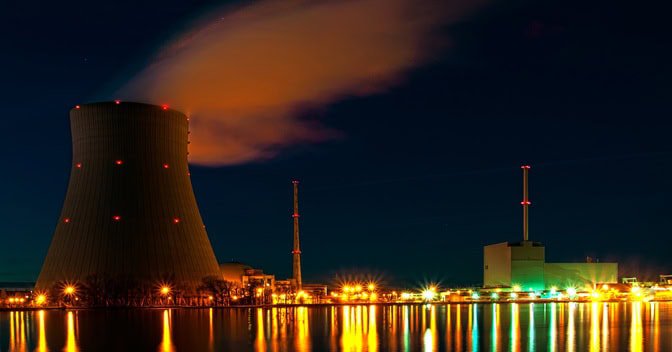
NEW ARTICLE: “New nuclear requires strong governance to avoid making old mistakes.” @UMich researchers call for policies to ensure that small modular reactors serve the public interest without creating and worsening familiar problems. https://t.co/QaEy1W0ete
news.engin.umich.edu
University of Michigan researchers call for policies to ensure that small modular reactors serve the public interest without creating and worsening familiar problems.
0
0
0
NEW ARTICLE: “byLLM: adding AI to software without the prompt engineering.” When using byLLM, developers completed tasks over three times faster and wrote 45% fewer lines of code when creating applications like chatbots and virtual assistants.

news.engin.umich.edu
When using byLLM, developers completed tasks over three times faster and wrote 45% fewer lines of code when creating applications like chatbots and virtual assistants.
0
0
2
80% of older adults still drive regularly. Less than half have a plan for retiring from driving. U-M researchers are working with Michigan to provide resources for families.
0
0
1
New U-M report: Policy recommendations for the safe and equitable deployment of small modular nuclear reactors. Read more here: https://t.co/QaEy1W0ete
0
0
1
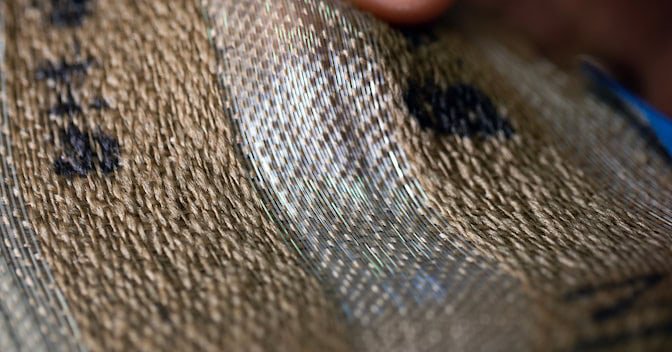
NEW ARTICLE: “Michigan startup reimagines clothing labels for recycling and authenticating brands.” Tags get cut off and tagless labels wear away, but new photonic fibers could serve as permanent barcodes. https://t.co/vjT5OGcBZo
news.engin.umich.edu
Tags get cut off and tagless labels wear away, but new photonic fibers could serve as permanent barcodes.
0
0
0
NEW ARTICLE: “AI for studying turbulence: A fresh look at an unsolved physics problem.” Explainable AI helps find key drivers of turbulence, offering new insights that could improve flight safety and industrial efficiency. https://t.co/Ysuz63wWHH

news.engin.umich.edu
Explainable AI helps find key drivers of turbulence, offering new insights that could improve flight safety and industrial efficiency.
0
2
5
NEW ARTICLE: “Large language models and research progress: A Q&A with Ricardo Vinuesa.” Guidelines for responsible LLM use to help, not hinder, research progress. https://t.co/jHRYEBrQ4y

news.engin.umich.edu
Guidelines for responsible LLM use to help, not hinder, research progress.
0
2
3
▶️ Pt. 3 - Detecting signals generated by collisions of tiny debris in orbit could help protect satellites, astronauts and the future of space missions. Now researchers @UMengineering are asking: Have our radio telescopes been picking up these collisions this whole time?
0
0
0
▶️ Pt. 2 - Earth’s orbit has millions of dangerous tiny debris. @UMengineering researchers are turning to an unexpected source of inspiration: dust storms on Mars. They've developed a creative experiment to perform @USNRL to see if they can detect this invisible space debris.
0
0
1
▶️ Pt. 1 - Space around Earth is crowded w/ more that 12,000 active satellites and ~8,700 metric tons of debris in orbit. And most of it is too small to track. Even a fragment the size of a paint fleck can cripple a satellite or endanger astronauts at speeds of 17,000 mph.
0
0
2
ARTICLE: The growing amount of debris in Earth's orbit is an urgent, global challenge that researchers here at Michigan are working on. From tracking tiny fragments to shaping international standards for satellite cleanup. Read the feature:

news.engin.umich.edu
As space debris threatens satellites and astronauts, Michigan Engineers are working on solutions.
0
0
2