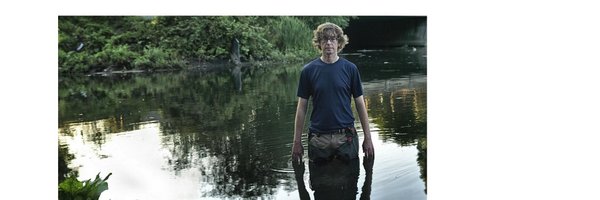

Theo Thomas
@TheoJThomas
Followers
2K
Following
2K
Media
645
Statuses
8K
I have set up London Waterkeeper, @LDNWaterkeeper, to be a strong voice for rivers. Photo by https://t.co/J1jzCXdhcQ
London
Joined June 2010
Banning most plastic wet wipes from 2027 may see little reduction in sewer blockages. Non-plastic wipes can still cause fatbergs if flushed. They don't disintegrate like toilet paper. Producers must pay towards the £100m it costs to clear them. https://t.co/Rmi8ldGamT

bbc.co.uk
Water companies say wet wipes containing plastic are one of the main causes of blockages in their pipes.
1
3
10
Sewers don’t pollute rivers every time it rains, but roads and paved areas do. Where surface water systems are connected to rivers all the muck that builds up in dry weather is dumped into them. This problem is unquantified and unregulated by the Environment Agency. 1/2
1
4
9
The sensor in the River Lea at the Olympic Park shows how it's struggling tonight. Pollution washed in by rain saw dissolved oxygen fall. It increased a little but is now sluggish. Still above the 20% danger threshold thankfully. It wants to be healthy, despite everything!

The River Lea is looking vulnerable at the moment. Dissolved oxygen above Lea Bridge Weir has dropped below 20%. The rain has washed in accumulated muck from 80 square miles of paved areas. It churns up pollution in the silt & turns the water cloudy so plants produce less O2.
1
2
5
The River Lea is looking vulnerable at the moment. Dissolved oxygen above Lea Bridge Weir has dropped below 20%. The rain has washed in accumulated muck from 80 square miles of paved areas. It churns up pollution in the silt & turns the water cloudy so plants produce less O2.
2
9
17
A great example of how to protect London from flooding & cut river pollution. These rain gardens are in the valley of the lost River Fleet at St Pancras. They soak up 49,000 litres of rain & help prevent sewers spilling. But we've paved so much of London we need many, many more
30
530
2K
It takes the Lea 2 days to recover from one change in conditions. Clouds on Weds cut the oxygen produced by plants in the river. Levels dropped to 35% (light blue line). Below 20% & fish struggle. Luckily not enough rain to wash in pollution which could have cut them to 10%. 1/2
2
4
12
The River Lea's monitors show how vulnerable it is in the summer. Warm water holds less oxygen but sun boosts photosynthesis. Today's clouds mean less oxygen (the red ovals). We're lucky there wasn't more rain to wash pollution off paved areas. In 2023 thousands of fish died. 1
2
5
7
Less than two hours to have your donation to London Waterkeeper doubled. We are one of the few river charities that doesn't take money from water companies or the Government. This allows us to be truly independent. https://t.co/RGaZRcM0XT
@BigGive
donate.biggive.org
Our work to protect London’s rivers is based on forensic research, accurate data, and environmental law. We need funding to continue this and build on our successes. While awareness of water pollut...
1
2
1
The National Audit Office report on the water regulators shows how we got into this mess. Our drinking water is highly regulated & high quality - the DWI checks asset health & network security. But none of the regulators checked on wastewater assets. https://t.co/Vt69NAgVgk 1/2

nao.org.uk
This report examines water regulators effectiveness in ensuring the nation's future water supply and attracting necessary investments.
2
17
27
Thanks to the @BigGive donations to @LDNWaterkeeper will be DOUBLED until midday on Tuesday the 29th April. Please share and spread the word to give a stronger voice to London's rivers! Donate here 🐟 https://t.co/gXl8kQHXjD
@Waterkeeper
donate.biggive.org
Our work to protect London’s rivers is based on forensic research, accurate data, and environmental law. We need funding to continue this and build on our successes. While awareness of water pollut...
0
2
4
So much crammed into this part of the Thames. Photo taken from the former Beckton Gas Works, with the Victorian pillars of the coal ship piers in the foreground. To the left Beckton Sewage Works. Towering above it all Barking Creek Barrier on the tidal Roding. 1/2
2
3
8
We all know corners where rain puddles & drainage is poor. Raingardens won't solve every problem, but along with depaving & making London more porous (again), at scale, it will make a difference. It's essential to protect vital infrastructure & make the city resilient. 2/2
0
3
6
It's heartening to see new spaces made to slow rain down. The raingarden on the left lets in runoff from the road. More schemes like this will reduce flood risk & sewer overflows. On the right is a bad example - no drop kerb so rain rushes into the sewer. 1/2
1
10
17
These trickles on Hampstead Heath are a long way from what the Fleet becomes, but they remind us that London was a city defined by its rivers. 4/4
0
9
17
Further down, there are just hints that the Fleet used flowed here. Street names or bends in the road. The once pastoral scene at St Pancras Old Church now has asphalt instead of water. 3/4
1
6
9
At Kenwood House you do get the sense that you are looking down a wide river valley. The dips and hollows give the headwaters somewhere to gather. 2/4
1
6
7
The only glimpses of the River Fleet are at Hampstead Heath before it disappears into the sewer system. Its wiggly journey to the Thames at Blackfriars is best shown on the old London County Council Main Drainage map at Abbey Mills Pumping Station. 1/4
2
20
48
To make Thames Water put sewer overflows online we used the law. We were the first to cite the clause in the Environmental Info Regs 2004: "make the information available by electronic means...& organize.. with a view to the active and systematic dissemination to the public" 1
English water companies are now showing real-time sewer overflows. As the Environment Act 2021 requires. This is good of course. But are all the unconsented sewers on this new map? Channel4 Dispatches found 100s of sewer pipes "off the books" https://t.co/pw3d0pd8SA (5m48s) 1
1
5
9
The Super Sewer is two tunnels joined together. The older Lee Tunnel in the east of London (2016). The new Thames Tideway Tunnel. Interestingly the Lee Tunnel held 370,000 m3 & but the much bigger TTT just 219,000 m3 on 23/9/24. September saw more than twice the average rainfall
0
1
1
On the 23/9/24 with 4 of its 21 gates operational the Super Sewer was more than a third full. This was after heavy rain that day (31.4mm). More interesting though is how was it coping 4 days later after 100mm of rain? We don't know. Thanks @nw3weather
https://t.co/Z9UTlACqh2
1
1
3