
Steven Quartz PhD
@StevenQuartz
Followers
3K
Following
4K
Media
314
Statuses
4K
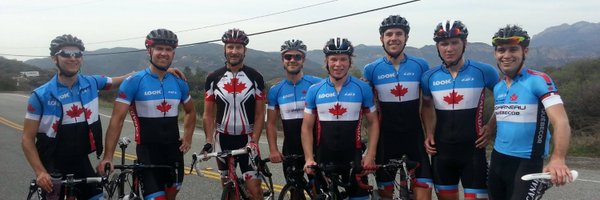
Professor @Caltech Computational Neuroscience, dopamine & decision-making, neuroeconomics, forthcoming "Dopamine Rules." Cyclist pursuing masters hour record.
Joined September 2011
Dopamine isn't just about individual reward learning. In 2005, my colleagues and I found that a dopaminergic reward prediction error signal extends to social exchange. People use this signal to build a model of others as they develop trust and cooperation. Once formed, this
1
0
22
She acknowledged that this was an error - that contrary to what her figure shows, there is no phasic dip after the conditioned cue when the reward follows. This mistaken view has been seen now by millions of readers and viewers - Hopefully, those who advocated for it will clarify
3
0
17
But, there's no evidence for this - and in fact as the Self commentary states, the paper reveals that "naturally evoked dopamine pulses are involved in both triggering and pursuit of reward-seeking behaviour." This is one of the key studies showing the exact opposite of what
1
0
13
At around the 22:00 mark of his podcast, @hubermanlab repeats the theory that a drop below baseline triggers the desire to obtain rewards and calls it the 'key thing':
1
0
6
Here's the original, well-known figure. It's from a commentary on a landmark 2003 paper (PMID: 12687000). But notice there's no phasic dip below baseline (the study itself doesn't find one either). There's no evidence from these studies of any phasic dip following a conditioned
3
0
10
Here's the claim below from her book - a detailed theory about a mini dopamine deficit = craving. This fits her view that addiction is driven by anhedonia - an aversive state we seek to relieve. Anyone familiar with dopamine research will know where this figure comes from. But
1
0
5
Some of the key claims in Lembke’s Dopamine Nation are simply wrong. One important example: Lembke's theory of craving as a dip below baseline, a claim @hubermanlab also makes in his Leverage Dopamine podcast. A 🧵on why it's wrong:
Awesome to see the resurgence in Dopamine Nation from my colleague @StanfordMed Dr Anna Lembke MD. As she explains, once the kinetics of pursuit-pleasure and pain are understood, people can make far better choices about their time & be genuinely happier.
2
7
41
More dopamine nonsense based on outdated understanding of dopamine and wild extrapolations from substance abuse.

Activities which give you a massive dopamine boost but require little effort will ultimately destroy you
4
4
31
Even if we grant Goff that phenomenal properties aren’t reducible to dispositions, that still doesn’t justify the epistemic contrast he’s pushing. In computational models, feelings play an analogous role to black holes in physics: they are latent variables inferred from publicly

Everything we know about black holes is based on public observation and experiments, or working out the math implications of a theory justified by public observation and experiments. Not so with feelings, which are known through private observation not public.
1
0
4
“Cheap dopamine” is a meme built on bad neuroscience: the outdated pleasure theory that equates cheap dopamine with cheap pleasures. It's really just a modern version of 19th century Thomas Carlyle's critique of “low” pleasures. But we don’t need faux dopamine talk to follow an
3
3
33
Pursuing worthwhile goals is good advice, but this gets the neuroscience wrong. Dopamine doesn’t deplete like a bank account, the popular “wave pool” analogy ignores how tightly it’s regulated by synthesis and reuptake, and everyday experiences don’t empty some “dopamine gas
Forget “getting dopamine”. You’re spending it. Spend wisely.
7
3
47
Gravel riding isn't just fun; it sits at the center of the 'longevity protocol Venn diagram:' 1. Cardiovascular fitness across varied intensities, 2. Navigation and route-finding keep spatial circuits plastic, 3. High-demand attentional, balance, and sensorimotor control on loose

Not just higher mean wattage (for same average speed), but higher variance which is why gravel is fun.
5
1
27
Saying calories can’t cause obesity because a calorie is “just a unit of energy” makes as much sense as saying interest rates can’t affect inflation because they’re “just a percentage.” In causal modeling (e.g., Pearl’s do-calculus), a cause is a manipulable variable where

I recently tried to explain in a tweet why “Calories Don’t Cause Obesity.” 👉 4 Key Points, below 👇 👉Video: https://t.co/gKyBNYfBty But the moment some people see those eight letters—C-A-L-O-R-I-E-S—they get triggered. So naturally… I’m doubling down. I’m not sure how many
28
4
84
Just because a therapy is delivered as a dietary pattern doesn’t mean its mechanism is better fuel. In epilepsy β-hydroxybutyrate acts as a signaling metabolite, inhibiting HDAC1/2, upregulating SIRT4 and GAD1, and shifting the GABA/glutamate balance, rather than simply serving

There are many dietary patterns that can result in weight loss. There are only two that stop seizures: ketogenic and low glycemic index diets. Interestingly, weight loss is not at all needed to get an anti-seizure effect. Children gain weight while on ketogenic therapies.
2
0
21
Columbia didn’t “prove” that. The paper found that, in very old adults, broad psychosocial composites correlated moderately with certain mitochondrial proteins in postmortem prefrontal cortex in a small subsample. No functional measures, no causal direction. A modest correlation

Researchers at Columbia just proved something remarkable: people who feel optimistic and purposeful have more mitochondria in their prefrontal cortex, and those mitochondria function better. Your mental state literally reshapes your cellular biology. 🧵
6
2
47
Social media doesn’t “atrophy” your cortex; it engages the same reinforcement-learning machinery that optimizes behavior in any complex environment. And social media use is well-captured by average-reward reinforcement learning models. Call it cheap reward if you want, but that's

Your brain atrophies faster than your muscles. Binging news and social media is the same as binging junk food. You are accumulating mental fat, becoming slower, and causing the neurological equivalent of atherosclerosis. Cognitive obesity.
3
3
17
Classic grift: wildly extrapolating from a study on gut cells in a lab dish to claiming a real-world hazard. Obviously intended to sell something no one needs, but these guys need to get a grip on the difference between a real hazard and a negligible risk no one needs to worry
Your dishwasher isn’t just washing your dishes, it’s coating them. Most pods and detergents leave chemical residue that you eat off later. Wild how people obsess over “clean eating” while their plates are covered in dishwasher chemicals. What detergent are you actually using?
7
2
17
More dopamine nonsense: there's no such thing as a 'dopamine reset.' Doomscrolling in the morning might be a bad idea, but not because it's ruining an imaginary reset. Your dopamine system isn't a dishwasher with a reset button...
You get 8 hours of dopamine reset every night. Don’t ruin it by doomscrolling within 60 seconds of consciousness. How stimulated you get in the AM sets the pace for the rest of the day. Do meaningful stuff, slowly.
11
4
59
Nina wildly overstates what the data show. 50% “reversal in 10 weeks” comes from a keto program in selected patients, not the population; 79% “less depression/anxiety” comes from small, uncontrolled studies. Recent meta-analysis found keto no better than high-carb for depression

Journalist Nina Teicholz: "If you implement a diet which dramatically reduces the amount of carbohydrates, you can reverse type two diabetes... reverse hypertension... reduce depression and anxiety by 79%... not within years, within weeks." "In the biggest clinical trial... more
31
7
68
The explore-exploit program isn't just about individual food choices - it's why Apple rolls out a new iphone every few years, why there's buzz about a new restaurant, and why one day everyone's wearing an Ed Hardy t-shirt then they suddenly disappear. It’s the same adaptive
Why are restrictive diets like keto so hard to maintain? Your brain runs an explore–exploit program. Exploitation repeats the best‑known option; exploration pushes you to try something new. When meals get repetitive, their reward value drops. That feels like boredom and cranks
3
2
11
Why are restrictive diets like keto so hard to maintain? Your brain runs an explore–exploit program. Exploitation repeats the best‑known option; exploration pushes you to try something new. When meals get repetitive, their reward value drops. That feels like boredom and cranks
26
7
36