
Joshua G. Smith
@Smith_JoshuaG
Followers
241
Following
322
Media
31
Statuses
118
Marine ecologist | Ph.D. Ecology and Evolutionary Biology | Coastal population, community, and ecosystem ecology | Data Science | Views and Tweets are my own.
Santa Cruz, CA
Joined May 2018
Our new paper in @RSocPublishing Proceedings B shows that denser, and more sheltered, #kelpforests can withstand serious stressors amid warming ocean temperatures. We also explored the response of 149 taxa to recent kelp declines and found... (1/6) https://t.co/o1KXTJUdZw
royalsocietypublishing.org
Ecological communities can be stable over multiple generations, or rapidly shift into structurally and functionally different configurations. In kelp forest ecosystems, overgrazing by sea urchins can...
1
3
17

New research finds sea otters in Monterey, California, thrived after sea stars died off—leaving a big mussel feast. https://t.co/xJazcG76wd
@ScienceAdvances
6
50
166

New research finds sea otters in Monterey, California, thrived after sea stars died off—leaving a big mussel feast. https://t.co/YbidKTmAq3
1
12
57
Paper: https://t.co/lMZzgRfhGh This study was part of a @ucsb_nceas working group with amazing coauthors @cori_lopazanski @ChrisFree14 @brunj7 @JoachimClaudet @JacobEurich @tessafrancis @DavidGillMarine @slziegler220 @mallarie_yeager @kj_nickols + others not on here!
0
0
1
👉Conservation performance significantly increased with increasing MPA age and habitat diversity. (4/5)
1
0
1
👉Targeted fish species biomass was significantly higher in 22 out of 59 MPAs (37%), although 46 (78%) had elevated biomass in MPAs. (3/5)
1
0
0
👉At the scale of California's MPA network, targeted (i.e., fished) fish biomass was significantly greater inside no-take MPAs compared with areas that allowed take. . 👉Three out of 4 regions exhibited significantly higher targeted fish biomass inside no-take MPAs. (2/5)
1
0
0
Our study published yesterday in @ConBiology shows that the conservation performance of marine protected areas (MPAs) accrues across ecosystems in individual MPAs and in a large #MPA network. We synthesized decades of monitoring data and found... (1/5)
1
0
1
Excited that our recent #openaccess paper in @ConBiology on ecological #stability and #MPAs is copy and type-set! It's been a blast presenting on this contribution over the past few months. Thanks all for the great questions and interest!
In this #openaccess article, Srednick and Swearer share their findings on the effects of protection and temperature variation on temporal stability in a #marine reserve network.🌊 Learn more at https://t.co/IN3H9O1waj
#conservation #marineconservation #science
0
2
5

Consequences of #kelp forest ecosystem shifts and predictors of persistence through multiple stressors #ProcB #OpenAccess
https://t.co/OaeVMPOQaZ
#Ecosystems @Smith_JoshuaG
0
1
4
Thanks so much to @MontereyAq, @ucsc, @PiscoScience, and @NSF for making this research possible! (6/6). . . . . #ecology #data #DataScience #conservation #R #dataviz #climatechange #marineheatwave
0
0
0
👉This study increases our understanding of (1) the community-wide consequences of kelp loss, (2) where kelp forests are likely to withstand multiple #climate stressors on their own, and can (3) help inform siting for #kelp #restoration (5/6)
1
1
1
👉Persistent kelp forests (those where kelp density did not significantly decline) also had higher densities of kelp to begin with, were relatively shallow, had a gradual reef slope, and were protected from wave exposure (4/6)
1
0
1
👉Patches of dense kelp can prevent shifts in sea urchin foraging behavior, and these persistent forests are better at withstanding multiple stressors (3/6)
1
0
0
👉Taxonomic community structure dramatically shifted during 2014-2016 marine heatwave and did not return. While the number of taxa did not decline, changes in their relative abundances led to an overall decline in taxonomic diversity for marine algae and invertebrates (2/6)
1
0
0
We have two open positions available for our paid kelp forest scientific diving internship at Monterey Bay Aquarium! 🤿🐟 Applications are due by February 29, 2024. https://t.co/XkDnhsUq43
1
13
18
📢POSTDOC POSITION (3 yrs): #kelp forests, #climatechange and #marineheatwaves. Come work with me, @Filbeek, @MelindaAColeman, @GeorgeValentin_ and our superb 🇳🇴🇩🇰 colleagues @Havforskningen. Field work, experiments, international collaboration and more https://t.co/zUYHM353B9
2
85
136
If you build it, they will come: Coastal amenities facilitate human engagement in marine protected areas. Our paper is now part of an issue in #PeopleAndNature: https://t.co/kTcRYgPMrt
#MPAs @ChrisFree14
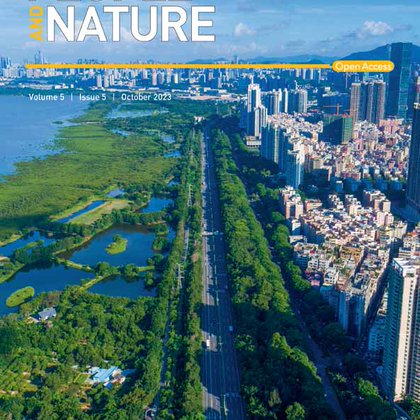
besjournals.onlinelibrary.wiley.com
Read the free Plain Language Summary for this article on the Journal blog.

Our new @ucsb_nceas #California MPA working group paper out in @PaN_BES led by @ChrisFree14 Do MPAs meet their human use objectives? We found that human engagement is promoted by developing land-based amenities that increase access to coastal MPAs ⤵️ https://t.co/40LB8d8Euq
0
4
7
Our new paper in @NatureComms uses a multi-species, multi-heatwave framework to model MHW impacts on marine predators. We find a surprising diversity of impacts across species and MHWs, signaling a need for ecosystem-based investigations of MHW impacts. https://t.co/sNrLhxMVyR
5
56
157
Nice coverage by @ethanpfreedman in @hakaimagazine on our recent paper: The 2014–2016 marine heatwave transformed the ecosystem of the northeast Pacific. Some of those changes seem here to stay. https://t.co/Hul1Ppn8CC via @hakaimagazine
hakaimagazine.com
The 2014–2016 marine heatwave transformed the ecosystem of the northeast Pacific. Some of those changes seem here to stay.
0
3
7