
Tai Chaiamarit
@BioTai1
Followers
325
Following
4K
Media
35
Statuses
973
Lecturer in Physiology, Faculty of Science, Mahidol University. Doing research on neuronal stress response and neurodegeneration. Opinions are my own.
Bangkok, Thailand
Joined May 2012

Circulating proteins in the blood contain *information* about the age of our organs. https://t.co/wN8pKAJYWe
nature.com
Nature Aging - Wang, Xiao and colleagues develop and validate organ-specific proteomic aging clocks across large population cohorts in the UK, the USA and China, which show strong performance in...
2
54
231

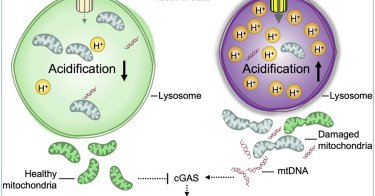
Online Now! Reversing lysosomal dysfunction restores youthful state in aged hematopoietic stem cells https://t.co/tb95lIyR3G
#stemcells
cell.com
Arif et al. show that lysosomes in aged HSCs are hyperacidic and dysfunctional, and that lysosomal alterations are central to HSCs’ decline with age. cGAS-STING signaling, driven by misprocessed...
1
34
112

Pressure to publish jumps. And researchers have no time to do science. (New survey from Elsevier) Survey of 3200 researchers: 1. Only 45% of scientists have sufficient time for actual research. 2. For 68%, the pressure to publish today is greater than 2-3 years ago. 3. 29% of
41
533
2K

🧠 65-Hour Live Imaging: Hippocampal Neurons Building Circuits Real-time dendritic growth & synaptic remodeling in the rat hippocampus; important to memory & plasticity. 🔬 Continuous multi-day view of neural adaptation. Credit: Louis Romet & Dr. C. Leterrier
24
294
1K

Neurons transmit signals through synaptic vesicle release, but the nanoscale dynamics of this process have been unclear. In a new Science study, researchers report using time-resolved cryo–electron tomography to visualize synaptic vesicle dynamics in situ and propose a unified
14
137
592

Our RAEFISH spatial transcriptomics technology is now published in Cell @CellCellPress! RAEFISH enables sequencing-free whole genome spatial transcriptomics at single molecule resolution. This work represents the first time that transcripts from more than 23,000 genes were
17
118
412

We reassessed the @TheLancet 14 dementia risk factors and added poverty, wealth shocks, income inequality, & HIV. This provides a larger estimation of preventable dementia & exposes gender inequities with larger burdens in women. Out in @eBioMedicine
https://t.co/jvS2eFsN89.
2
26
61

Klein and Overholtzer @mskcancercenter discuss new findings from the Deretic group (@duque_thabata et al. https://t.co/73IWLjouYg) showing ATG16L, a regulator of lysosomal stress responses, has a day job regulating the v-ATPase. https://t.co/oXPskfkGUJ
0
9
33

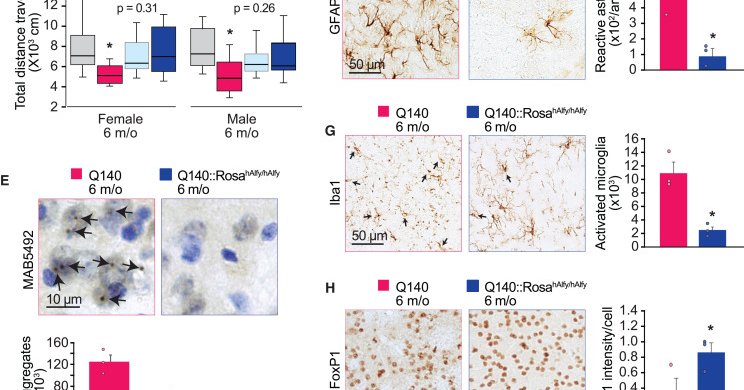
A rare genetic variant confers resistance to neurodegeneration across multiple neurological disorders by augmenting selective autophagy: Neuron
cell.com
In Croce et al. the discovery of a rare SNP in the Venezuelan HD kindreds that is associated with a delayed age of onset of up to 23 years reveals how preventing aberrant protein accumulation is...
0
9
39


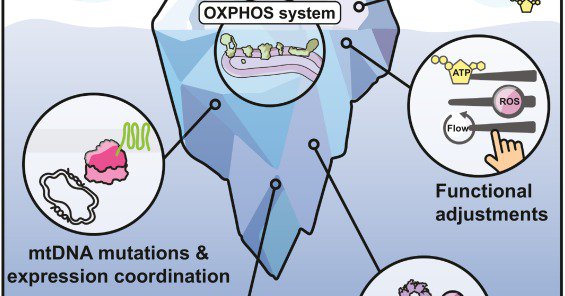
The fate of mitochondrial respiratory complexes in aging: Trends in Cell Biology
cell.com
While mitochondrial dysfunction is one of the canonical hallmarks of aging, it remains only vaguely defined. Its core feature embraces defects in energy-producing molecular machinery, the mitochond...
3
48
152

Apoptotic vesicle release from a cell as it gives up the ghost under oxidative stress, as seen by MOSAIC lattice light sheet mode.
14
137
578
In a Science study last year in mice, researchers introduced CHARM, a compact and versatile epigenetic editor that can be used to silence prion protein throughout the brain. Learn more in this #SciencePerspective: https://t.co/b80Gcjzkiw
20
105
353


I’m excited, relieved, and honored to announce that my paper describing non-canonical mitotic mechanisms in the early mouse embryo is out in @ScienceMagazine ! (link at end of 🧵)
12
119
560

Big News: Thrilled to share that my latest PhD work is now published in @Nature. We identify PLA2G15 as the lysosomal BMP hydrolase and show that blocking it improves outcomes in a severe neurodegenerative disease model. Read the article here https://t.co/dFZwLelCac (1/7)

nature.com
Nature - Lysosomal phospholipase PLA2G15 was identified as a physiological BMP hydrolase whose activity depends on unique esterification and stereochemistry of BMP and offers a potential...
11
40
174

Why do some neurons say “sleep” while others shout “stay awake!” — inside the same brain? In fruit flies, researchers just mapped the molecular chaos behind this nightly tug-of-war. And it’s wilder than we thought. https://t.co/aAYK9TcCNi
1
32
143

The retina is arguably the most impressive part of the brain - it's also the only part of the brain that faces the world directly - it’s a sensor and processor in one Consumes 50% more energy per gram than the rest of the brain. 1000:1 compression from retina to optic nerve
67
323
2K

Why do living organisms need sleep? A new theory suggests that myelin acts as a proton capacitor, accumulating energy during sleep. 🧵1/12
182
1K
8K

STING mediates lysosomal quality control and recovery through its proton channel function and TFEB activation in lysosomal storage disorders https://t.co/Upr5ZVe1Ny
1
34
142